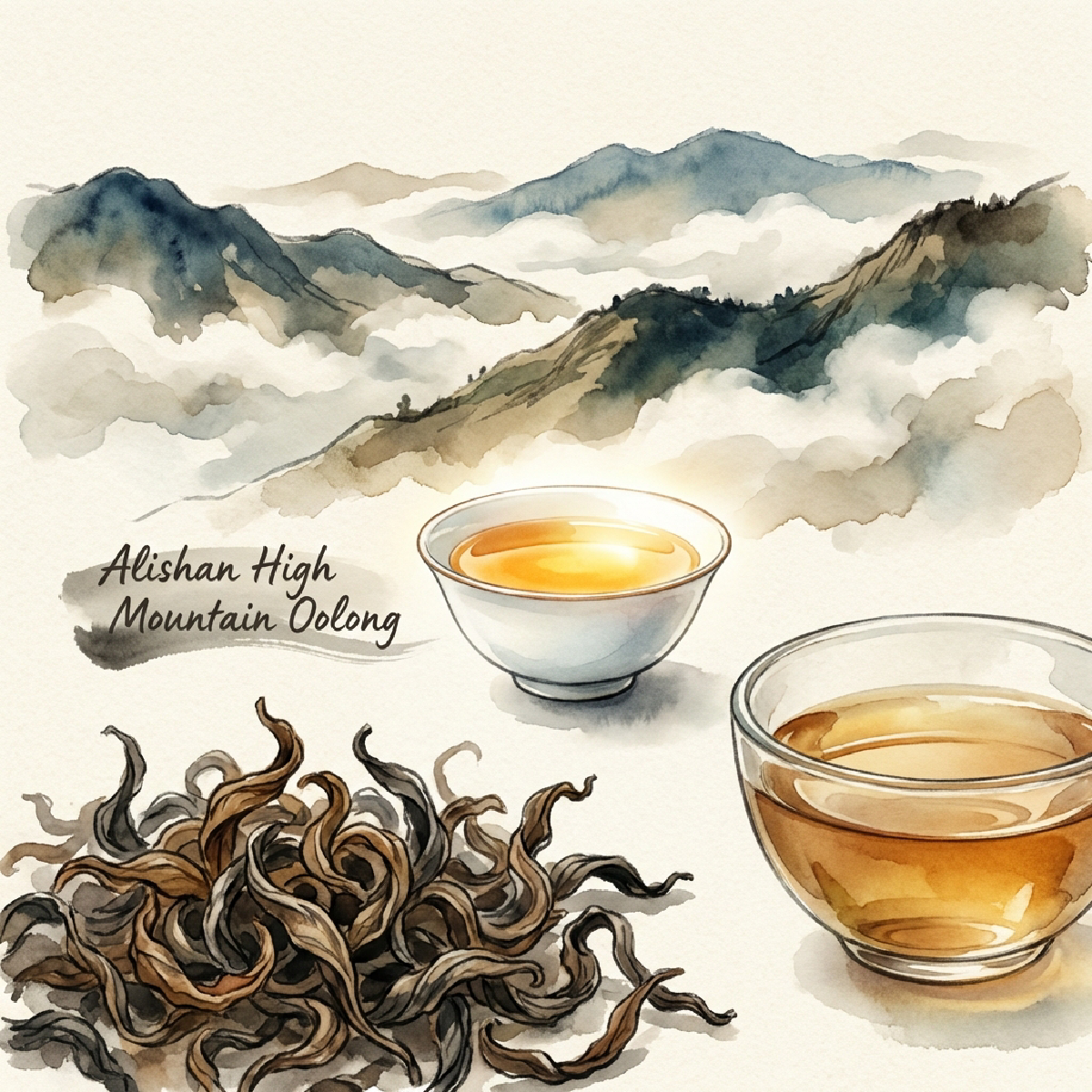
The Culture: The Icon of High Mountain Tea
Alishan is the most famous and beloved of Taiwan’s Gao Shan (High Mountain) teas. While tea has been grown in the Alishan range for decades, its modern fame as a premium oolong destination exploded in the 1980s.
In Taiwan, “High Mountain Tea” is more than just a name—it is a legal and cultural designation for tea grown above 1,000 meters. Alishan is the gateway to this world, known for producing teas that are creamy, floral, and incredibly refreshing. It is the gold standard for many tea lovers seeking a balanced, elegant oolong.
Geography: The Mist and Clouds of the Central Range
The Alishan mountain range in Chiayi County, Central Taiwan, offers a near-perfect environment for tea:
- Altitude: 1,000 to 1,600 meters. The cool mountain air and constant afternoon mist (the “Sea of Clouds”) slow the growth of the leaves, making them thick, tender, and high in flavor compounds.
- Micro-climate: The significant temperature difference between day and night reduces bitterness and increases the tea’s natural sweetness and “creamy” mouthfeel.
- Jin Xuan vs. Qing Xin: Alishan is famous for two main cultivars: Jin Xuan (known for its natural milky aroma) and Qing Xin (known for its sophisticated orchid fragrance).
Decoding the Grades
In the world of Alishan oolong, the “grade” is often determined by the specific mountain peak and the harvest season.
1. The Seasons
- Winter (Dong Pian): Harvested in late October/November. Known for its clarity, fragrance, and “cold” mountain charm. High demand.
- Spring (Chun Cha): Harvested in April/May. Known for its thick body, sweetness, and vibrant energy.
2. Specific Regions
Within Alishan, specific areas like Shi-Zhuo and Zhangshuhu are prized for having the best terroir and the most skilled masters.
How to Identify Quality
A high-quality Alishan should feel “substantial” in the mouth, like drinking liquid silk.
| Feature | High-Quality (Premium) | Lower-Quality (Mass Market) |
|---|---|---|
| Appearance | Tightly rolled, heavy, emerald-green beads; uniform in size. | Loose, light-weight, or yellowish-brown beads; many stems. |
| Aroma | Fresh mountain flowers (lily/orchid), cream, and sweet fruit. | Grassy, flat, or artificially “milky.” |
| Liquor | Clear, bright gold or honey-yellow; viscous oily sheen. | Dull yellow or cloudy. |
| Taste | Sweet, “creamy” texture, buttery, with a cooling throat sensation. | Thin, watery, or harshly bitter. |
Reputable Brands & Where to Buy
Because of its fame, “Alishan” is often used to label cheaper teas grown at lower altitudes. Look for vendors who specify the exact elevation and harvest date.
Reputable Specialized Brands:
- Alishan Farmers Association: They run the official competitions and sell certified, prize-winning tins.
- International-Friendly Online Shops:
- Eco-Cha: Direct from the source in Taiwan, with incredible videos and stories of the specific farmers.
- Taiwan Sourcing: Offers a wide range of Alishan teas, including traditional charcoal-roasted versions.
- Floating Leaves: Based in Seattle but with deep ties to Taiwan; excellent for high-end, “connoisseur” Alishan.
- Mountain Tea: A reliable source for fresh, seasonal Alishan high-mountain harvests.
Alishan oolong is a “happy” tea—bright, floral, and uplifting. It is exceptionally forgiving to brew. For the full experience, use a porcelain gaiwan and 90-95°C water to unlock the “creamy” secrets of the high mountains.