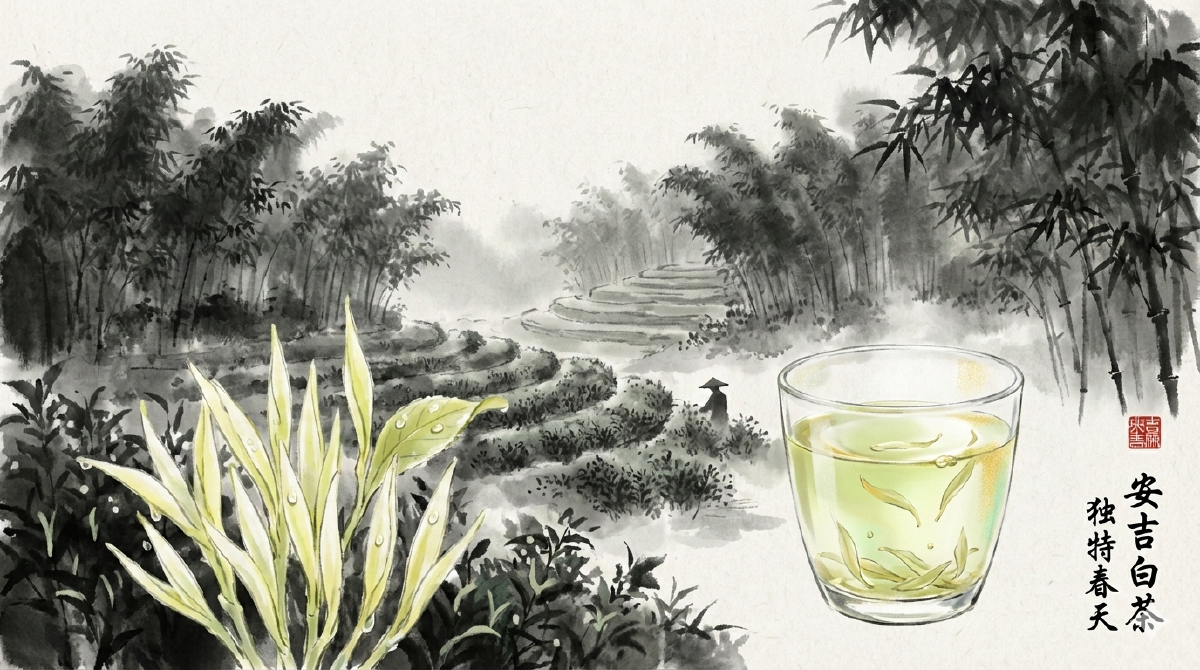
The Mystery: Is it White or Green?
Anji Bai Cha is one of the most unique teas in China. Despite its name (which translates to “Anji White Tea”), it is technically a Green Tea.
The confusion comes from the cultivar, “Bai Ye No. 1.” In early spring, when temperatures are cool, the tea leaves can appear very pale due to low chlorophyll. As the weather warms up, the leaves turn green. This rare genetic mutation was rediscovered in 1982 and is sometimes linked (in local retellings) to much older written references. Because it is high in amino acids (including L-theanine) and low in chlorophyll early in the season, many drinkers find it sweeter and less bitter than typical green teas.
Geography: The Bamboo Forests of Anji
Anji County, in Zhejiang Province, is famous not just for tea but for its massive, lush bamboo forests (it was the filming location for parts of Crouching Tiger, Hidden Dragon).
The tea gardens are situated in a unique micro-climate:
- High Humidity: The surrounding bamboo forests trap moisture, creating a cool, damp environment.
- Altitude: The mountain air keeps the spring temperatures low, which is crucial for maintaining the “whiteness” (and sweetness) of the buds.
- Soil: Rich in minerals that contribute to the tea’s clean, savory finish.
Decoding the Grades
Anji Bai Cha has a very short harvest window, usually only 2-3 weeks in early spring.
1. Harvest Timing
- Pre-Qingming (Ming Qian): The first harvest. These are the “whitest” and sweetest buds. They have the highest concentration of L-Theanine, which provides a calming effect.
- Post-Qingming: As the temperature rises, the leaves produce more chlorophyll and turn green. These are still high quality but lose the signature “Anji” paleness and sweetness.
2. Physical Form
- Special Grade (Te Ji): Single buds or one bud with one tiny leaf. They look like pale jade needles.
- Grade 1 & 2: Slightly larger leaves, more green in color, and a bolder, more vegetal flavor.
How to Identify Quality
Anji Bai Cha is prized for its “Umami” and lack of bitterness.
| Feature | High-Quality (Premium) | Lower-Quality (Imitation) |
|---|---|---|
| Appearance | Extremely pale, yellowish-green (nearly white); thin and needle-like. | Dark green, thick, or yellowish; looking like standard green tea. |
| Aroma | Fresh orchid, toasted soy milk, and “ocean breeze.” | Grassy, flat, or excessively nutty. |
| Liquor | Pale, luminous green-gold; crystal clear. | Dull yellow or cloudy. |
| Taste | Sweet “Umami” (like a savory broth), velvety, zero bitterness. | Astringent, harsh, or metallic. |
Reputable Brands & Where to Buy
Because of its high price and popularity, Anji Bai Cha is frequently faked using cheaper green tea varieties.
Reputable Specialized Brands:
- Anji Local Brands: Look for Songming or Dongsheng.
- International-Friendly Online Shops:
- Teavivre: Known for providing several grades of authentic Anji Bai Cha with detailed harvest dates.
- Verdant Tea: Excellent for small-batch, farmer-direct transparency.
- Seven Cups: A reliable source for high-end, award-winning spring greens.
- Meimei Fine Teas: Offers curated, top-shelf selections of the earliest spring harvests.
Anji Bai Cha is the perfect green tea for people who “don’t like green tea.” Its natural sweetness and low bitterness make it incredibly approachable. For the best experience, use a glass cup to admire the pale, dancing leaves.