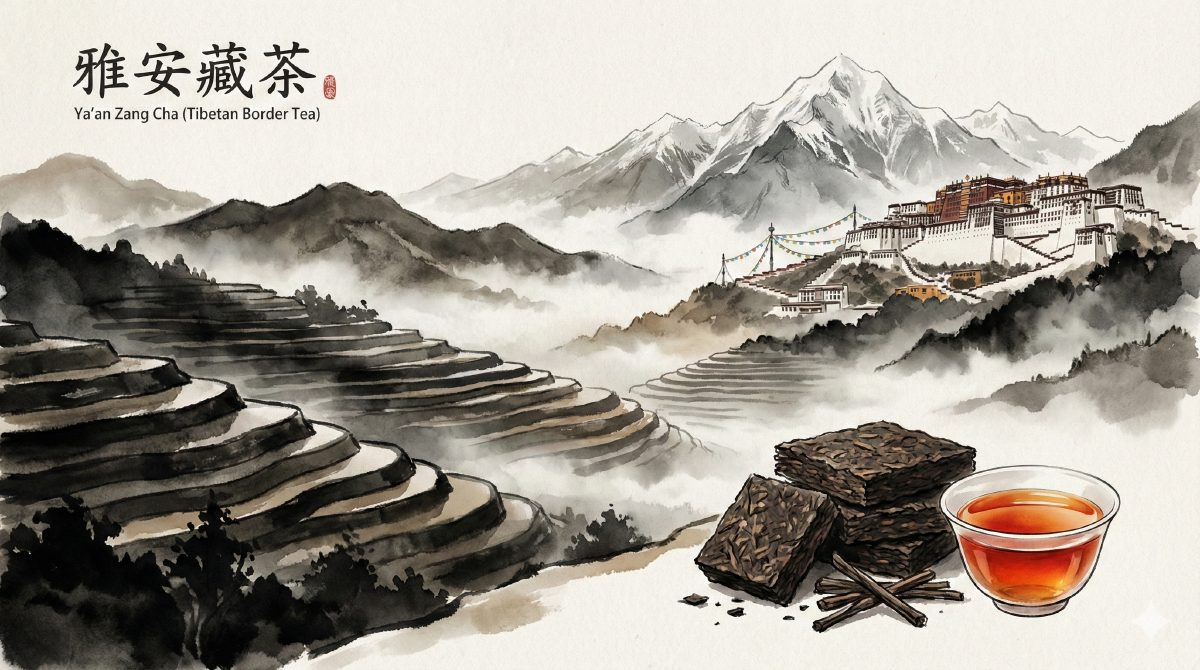
The Culture: The “Life-Giving” Tea of the Plateaus
Ya’an Zang Cha (literally “Tibetan Tea”) is one of the most historically significant teas in China. For over 1,300 years, it was a major trade commodity on the Sichuan-Tibet Tea Horse Road. In the high-altitude, harsh environment of the Tibetan Plateau—where fresh vegetables can be scarce—this tea became a daily staple in butter tea culture. There is a famous Tibetan saying: “I would rather go three days without food than one day without tea.”
Unlike the delicate green teas of the lowlands, Zang Cha is built for endurance. It is designed to be boiled for long periods and mixed with yak butter, salt, and roasted barley (Tsampa). It is a “working” tea, robust and grounding.
Geography: The “Rainy City” of Ya’an
The home of Zang Cha is Ya’an, a city in Sichuan Province known as the “Rainy City” (Yu Cheng) because it receives some of the highest rainfall in China.
- Terroir: The constant rain and humidity are essential for the “Large Leaf” tea bushes of Sichuan. This environment also provides the perfect conditions for the complex, multi-stage fermentation process that defines Zang Cha.
- The Ancient Road: Ya’an was the starting point for the treacherous journey to Lhasa. The tea was traditionally compressed into heavy bricks (wrapped in bamboo) that could withstand months of transport on the backs of porters and mules.
Decoding the Grades & Processing
Zang Cha undergoes one of the more complex processing methods in the tea world, often described as involving many distinct steps of firing, rolling, and “aging in piles” (fermentation).
1. The Raw Material
Zang Cha uses mature leaves and stems. The stems are actually a vital component—they contain natural sugars that enhance the sweetness of the tea during long boiling sessions and provide structure to the compressed bricks.
2. Modern Form vs. Traditional
- Traditional Bricks: Large, heavy, and tightly compressed.
- Modern “Loose” Zang Cha: Easier to brew for home use, often aged for 3–5 years to mellow out the flavor.
How to Identify Quality
A good Zang Cha should be “Sweet, Mellow, and Warming,” with a brilliant red liquor.
| Feature | High-Quality (Premium) | Lower-Quality (Mass Market) |
|---|---|---|
| Appearance | Dark brown leaves with visible stems; for bricks, a clean, even compression. | Grayish, dusty, or containing unwanted debris. |
| Aroma | Sweet dates, roasted grains, and aged wood. | Musty, sour, or like wet straw. |
| Liquor | Deep, brilliant ruby red; clear and luminous (often called “Guan Gong Red”). | Murky, cloudy, or dull brown. |
| Taste | Sweet mouthfeel, exceptionally smooth, and very gentle on the stomach. | Harshly acidic, bitter, or thin. |
Reputable Brands & Where to Buy
Zang Cha is a specialty of Sichuan. Look for vendors who focus on the “Traditional Processing” (Gu Fa) of Ya’an.
Reputable Specialized Brands:
- Ya’an Tea Factory: The oldest and most famous producer, with a history dating back to the Ming Dynasty.
- Jin Jian (Golden Sword): A highly respected brand known for high-quality, aged Zang Cha.
- International-Friendly Online Shops:
- Yunnan Sourcing: Offers a great selection of authentic Ya’an Zang Cha bricks and loose-leaf versions.
- Chawangshop: A specialty shop based in Kunming with a deep focus on different varieties of “Border Tea.”
- Bitterleaf Teas: Occasionally carries high-quality aged Zang Cha for the enthusiast market.
Ya’an Zang Cha is a tea for the soul. It is exceptionally grounding and tends to stay smooth even with long boils. For the best experience, simmer a small amount of the tea in a pot for 5–10 minutes and enjoy its deep, sweet warmth.