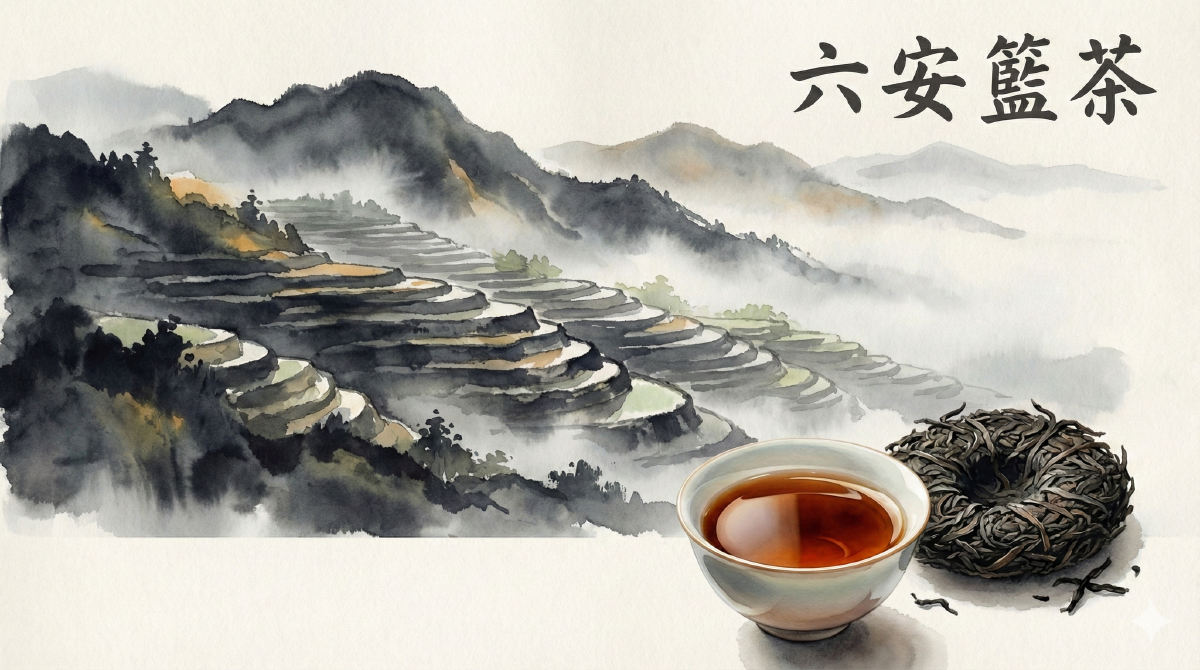
The Culture: The “Medicine” of the Overseas Chinese
Liu An Basket Tea is a historic “Hei Cha” (Dark Tea) from Anhui Province. It is distinct from the green tea Lu’an Gua Pian, although they share the same geographical name. Its history is deeply tied to the trade with Southeast Asia and Hong Kong, where it was traditionally used as a medicinal tea for cooling the body and aiding digestion.
The most iconic feature of Liu An tea is its packaging: it is compressed into small bamboo baskets (usually 250g to 500g) lined with bamboo leaves. In the past, it was so highly regarded for its health benefits that it was often kept in household medicine cabinets and aged for decades before being used.
Geography: The Mountains of Qi-Men
While named after Lu’an (Liu An), the majority of the production actually takes place in Qimen County (the same region famous for Keemun Red Tea) in Southern Anhui.
- Terroir: The region is characterized by high mountains, frequent mist, and slightly acidic soil. The tea bushes used for Liu An are the same local small-leaf varieties used for Keemun.
- The Secondary Fermentation: After the initial processing (similar to green tea), the tea is steamed and compressed into baskets. It then undergoes a unique “secondary fermentation” where it is exposed to the night dew (known as Gua Lu) before being stored and aged. This process removes the “green” bitterness and creates its signature smooth, woody character.
Decoding the Grades & Aging
Liu An is a tea designed for long-term aging. Like Pu-erh, its value increases significantly with time.
1. New vs. Aged
- New Liu An (0-5 years): Slightly smoky, herbal, and refreshing. The liquor is bright orange.
- Aged Liu An (10+ years): The smoke transforms into a “betel nut” and camphor aroma. The liquor becomes deep red, and the taste is exceptionally smooth and “cooling.”
2. The Bamboo Leaf
A unique aspect of brewing Liu An is the bamboo leaf liner. Many traditionalists brew a small piece of the aged bamboo leaf along with the tea to add a subtle “forest” sweetness and enhance the medicinal properties.
How to Identify Quality
A high-quality Liu An should be “Sweet, Cooling, and Clean.”
| Feature | High-Quality (Premium) | Lower-Quality (Mass Market) |
|---|---|---|
| Appearance | Small, tightly twisted black leaves; the bamboo basket should be sturdy and clean. | Broken, dusty leaves; moldy or rotting bamboo. |
| Aroma | Aged wood, betel nut, camphor, and a hint of forest smoke. | Musty, “pond-y,” or like wet cardboard. |
| Liquor | Deep ruby red (if aged) or amber; clear and luminous. | Murky, cloudy, or dull brown. |
| Taste | Silky mouthfeel, “cooling” sensation in the throat, sweet aftertaste. | Thin, watery, or harshly acidic. |
Reputable Brands & Where to Buy
The Liu An market is small and niche compared to Pu-erh. Look for reputable Hong Kong or specialized Hei Cha vendors.
Reputable Specialized Brands:
- Sun Yi Shun (孫義順): The most famous historical brand for Liu An tea, known for its high-quality “Old Brand” baskets.
- International-Friendly Online Shops:
- The Tea Hong: Highly curated selections of aged Liu An baskets with detailed provenance.
- Yunnan Sourcing: Offers several varieties of aged Liu An, including “Sun Yi Shun” pressings.
- Chawangshop: A specialty shop based in Kunming with a deep focus on artisanal Hei Cha.
- Essence of Tea: Known for sourcing high-quality aged Liu An from Hong Kong storage.
Liu An is a “quiet” tea. It doesn’t have the explosive aroma of an oolong, but it provides a deep, grounded comfort. If you enjoy earthy, woody, and medicinal flavors, an aged Liu An basket is a must-have for your collection.