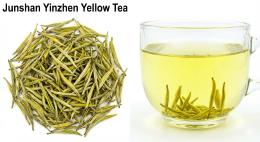
Yellow Tea (Huang Cha) is a rare, golden sunset. In the world of tea, yellow tea is often called “the lost art.” It is one of the rarest categories of tea, often overlooked because its production is so labor-intensive and time-consuming that many farmers have simply switched to making green tea instead. But for those who find it, yellow tea offers a sophisticated, mellowed elegance that removes the “bite” of green tea while retaining its soul.
The Imperial Gold: History and Culture
Yellow has always been the most prestigious color in Chinese history, strictly reserved for the Emperor. It is no surprise, then, that yellow tea was developed as a tribute tea for the imperial court. Historically, the transition from green to yellow happened almost by accident; it was discovered that if green tea leaves weren’t dried quickly enough, they would turn yellow and develop a much smoother, sweeter taste.
What began as a processing “mistake” became a highly sought-after delicacy. During the Qing Dynasty, yellow tea was the height of fashion among the scholarly elite. However, because the “yellowing” process requires a tea master to sit with the leaves for days, carefully monitoring humidity and temperature, much of the knowledge was lost during the 20th century. Today, we are seeing a small but passionate revival of this imperial craft, as tea lovers seek out its unique “mellow fire” character.
The Rare Three: Famous Varieties
Because true yellow tea is so difficult to produce, there are only a handful of authentic varieties left in China. They are generally categorized by the size of the leaf used.
| Variety | Leaf Type | Origin | Flavor Profile |
|---|---|---|---|
| Junshan Yinzhen | Single Buds | Junshan Island, Hunan | Silky, notes of sweet corn and toasted hay. |
| Mengding Huangya | Tender Buds | Mengding Mt, Sichuan | Nutty, creamy, with a floral “yellow” sweetness. |
| Huoshan Huangya | Bud & 1-2 Leaves | Huoshan, Anhui | Fresh but savory, with a distinct “cooked pea” aroma. |
| Beigang Maojian | Leaves & Buds | Yueyang, Hunan | Bolder, more rustic, with a lingering toasted finish. |
Islands and Sacred Peaks: The Geography of Yellow Tea
The geography of yellow tea is as exclusive as the tea itself. The most famous variety, Junshan Yinzhen, grows on a tiny island in the middle of Dongting Lake in Hunan Province. The island is often shrouded in a thick, silvery mist that rises from the lake, creating a microclimate that keeps the tea buds incredibly tender. The soil here is sandy and rich, giving the tea a unique mineral backbone.
Another legendary home for yellow tea is Mengding Mountain in Sichuan, which is considered the birthplace of tea cultivation. The “misty peaks” of Mengding are so damp that the locals say “the sun is rarely seen.” This perpetual dampness is actually a blessing for yellow tea; it provides the natural humidity needed for the delicate “yellowing” process that happens after the leaves are picked. These regions are steeped in a culture of patience, where the tea masters don’t rush the harvest, but rather wait for the perfect moment when nature and technique align.
The Secret of Men Qing: How Yellow Tea is Made
What separates yellow tea from green tea is a single, transformative step called Men Qing, or “Sealing Yellow.” This is a process of micro-fermentation that removes the “grassy” astringency of the leaf and replaces it with a smooth, savory depth.
- Fixing (Shaqing): Like green tea, the process begins with high heat in a wok to stop oxidation. However, the temperature is usually slightly lower to keep the leaves pliable.
- First Wrapping (Men Qing): This is the magic step. While the leaves are still warm and damp, they are wrapped in special brown paper or thick cloths. They are left in small piles to “smother” for several hours or even days.
- Secondary Firing: The leaves are taken out and lightly fired again to remove some moisture.
- Second Wrapping: The tea master might wrap them again. This cycle of heating and smothering causes the chlorophyll to break down and the polyphenols to undergo a light, non-enzymatic oxidation.
- Slow Drying: Finally, the tea is dried over a very low charcoal fire. This slow bake locks in the golden color and develops the “toasted” sweetness that defines the category.
The Patient Brew: How to Prepare Yellow Tea
Yellow tea is remarkably forgiving. Because the “Men Qing” process has already removed the harsh tannins, you rarely have to worry about the tea becoming bitter if you over-steep it.
I always recommend using a tall glass for Junshan Yinzhen. Much like Silver Needle white tea, these buds are heavy and covered in downy hair. When you pour the water, they will rise to the top, then slowly sink, then rise again—a phenomenon known as the “three rises and three falls.”
- Water Temperature: Aim for 85°C to 90°C. It can handle more heat than a delicate green tea.
- Vessel: A glass or a thin porcelain Gaiwan is perfect.
- The Experience: The liquor will be a pale, shimmering gold. When you sip it, pay attention to the “throat feel.” Yellow tea is famous for being incredibly smooth; it lacks the “sharpness” of green tea and instead feels like liquid silk.
Back to Major Tea Categories .