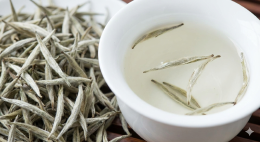
If green tea is a snapshot of spring, white tea is the gentle exhale of a quiet afternoon. Among the various categories of Chinese tea, white tea is the most minimalist, the most ethereal, and perhaps the most misunderstood. Often sought after for its high antioxidant content and its delicate, honey-sweet profile, it is a tea that celebrates “non-doing.” As we venture into the mist-covered hills of Fujian, you’ll discover that while white tea involves the least amount of human intervention, it requires the most profound understanding of nature.
The Moonlight Legacy: History and Culture
White tea’s history is a transition from wild medicine to imperial luxury. In ancient times, people simply plucked wild tea buds and dried them in the sun to preserve them for medicinal use. It was believed to cool the body and clear the mind. However, it wasn’t until the Song Dynasty that white tea truly entered the cultural limelight. Emperor Huizong, a famous tea connoisseur, was so enamored with the “white tea” of his time (which was a rare, light-colored varietal) that he wrote extensively about its unparalleled elegance.
In modern Chinese culture, there is a famous saying regarding white tea: “One-year tea, three-year medicine, seven-year treasure.” Unlike green tea, which must be drunk fresh, white tea has the unique ability to age. As the years pass, the floral, grassy notes transform into deep aromas of medicinal herbs, dried dates, and aged wood. This cultural shift from “freshness” to “longevity” makes white tea a favorite among collectors who enjoy watching a tea evolve over a decade.
The Spectrum of White: Famous Varieties
Because white tea is defined by its pluck and maturity, the varieties are categorized by which part of the plant is harvested. Here is a breakdown of the four pillars of white tea:
| Variety | Harvest Standard | Flavor Profile | Character |
|---|---|---|---|
| Bai Hao Yin Zhen (Silver Needle) | Only the unopened, fuzzy buds. | Sweet, delicate, notes of soy milk and honeysuckle. | The “Champagne” of white tea; elegant and silky. |
| Bai Mu Dan (White Peony) | One bud and the first two leaves. | Floral, fuller body, hints of melon and hay. | A perfect balance of bud sweetness and leaf depth. |
| Gong Mei (Tribute Eyebrow) | Smaller leaves from “Xiao Bai” bushes. | Bold, earthy, and slightly fruity. | Often has a more rustic, wilder taste profile. |
| Shou Mei (Longevity Eyebrow) | Mature, larger leaves and stems. | Rich, honeyed, notes of autumn leaves and dates. | Excellent for aging and very resilient to brewing. |
Mist and Stone: The Geography of Fujian
If you want to find the heart of white tea, you must look to Fujian Province, specifically the regions of Fuding and Zhenghe.
- Fuding: Located along the coast, Fuding is the birthplace of the Da Bai (Big White) tea cultivar. The sea breezes and hilly terrain create a humid, temperate environment that allows the tea buds to grow thick and covered in silver downy hairs.
- Zhenghe: Located further inland at higher altitudes, Zhenghe teas are often picked later and withered longer due to the cooler mountain temperatures. This results in a “redder” or more oxidized white tea that has a naturally deeper, more savory sweetness compared to the bright, crisp profile of Fuding teas.
The culture in these villages is deeply tied to the sun. On a clear day in Fuding, you will see bamboo racks stretching across every available flat surface, as the entire community works in harmony with the weather to dry the season’s harvest.
The Alchemy of the Sun: How White Tea is Made
The beauty of white tea lies in its simplicity. There is no high-heat “fixing,” no rolling to break cell walls, and no roasting. Instead, the tea master acts as a guardian, watching over the leaves as they transform naturally.
- Plucking: Precision is key. For Silver Needle, the pluckers must work quickly in the early spring to harvest only the fat, unopened buds before they unfurl into leaves.
- Withering: This is the most critical stage and can last anywhere from 40 to 72 hours. The leaves are spread out on bamboo trays, either outdoors under mild sunlight or indoors in highly ventilated rooms. During this time, the leaves lose about 70-80% of their moisture. A very slight, natural oxidation occurs—not enough to turn the leaves black, but just enough to develop the tea’s signature fragrance.
- Drying: Once the desired fragrance is achieved, the leaves are given a gentle final dry at very low temperatures (usually around 40°C–50°C) to ensure they are stable for storage.
This minimal processing preserves the trichomes (the tiny silver hairs) on the buds, which contain high concentrations of theanine, contributing to the tea’s characteristic “thick” mouthfeel and calming effect.
The Gentle Steep: How to Prepare White Tea
White tea is surprisingly resilient. While it is often grouped with green tea, high-quality white tea—especially aged Shou Mei—is much harder to “ruin” with heat.
For Silver Needle or White Peony, use water around 85°C to 90°C. A porcelain Gaiwan is the ideal vessel because it allows the heat to dissipate slowly while showcasing the beautiful, pale-gold liquor. Unlike green tea, white tea benefits from slightly longer steeping times; don’t be afraid to let it sit for 3 to 5 minutes if brewing in a large pot.
For Aged White Tea, you can actually use boiling water. In China, many enthusiasts will even “simmer” aged Shou Mei in a glass kettle over a small flame after they have finished steeping it, extracting a deep, medicinal sweetness that tastes like honey and jujubes.
Back to Major Tea Categories .