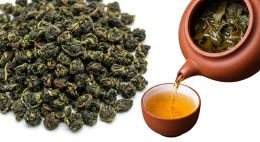
Oolong Tea (Wulong) is a grand, multi-act opera. For many tea lovers, Oolong is the “final destination”—it is the most complex, diverse, and technically demanding category of tea in existence. Positioned artistically between unoxidized green tea and fully oxidized black tea, Oolong offers a dizzying spectrum of flavors, ranging from the scent of blooming lilies and honeyed peaches to the deep, comforting aroma of roasted chocolate and charcoal-fired minerals.
The Legend of the Black Dragon: History and Culture
The name “Wulong” literally translates to “Black Dragon.” While there are many folktales about its origin—most notably the story of a hunter named Wulong who was distracted by a deer and left his tea leaves to wither and oxidize by accident—the true history of Oolong is rooted in the Wuyi Mountains of Fujian during the late Ming and early Qing Dynasties.
Unlike the simple “pluck and dry” method of white tea, Oolong was born from a desire for complexity. It represents the pinnacle of Chinese craftsmanship, giving rise to the Gongfu Cha (Tea with Skill) ceremony. In Chinese culture, Oolong isn’t just a drink; it is a meditative practice. To drink Oolong is to engage in a “dialogue” with the tea master, as each successive steep reveals a new layer of the leaf’s personality. It is the tea of scholars, poets, and connoisseurs who value depth and “Yan Yun”—the elusive “rock rhyme” or soul of the tea.
The Four Pillars: Famous Varieties
Because Oolong is defined by its degree of oxidation (anywhere from 10% to 80%) and its roasting level, the variety is staggering. Here are the four “Grand Cru” regions and their most famous offerings:
| Variety | Region | Oxidation/Roast | Flavor Profile |
|---|---|---|---|
| Da Hong Pao (Big Red Robe) | Wuyi Mt, Fujian | Heavy Roast | Mineral, “rocky,” notes of chocolate and woodsmoke. |
| Tieguanyin (Iron Goddess) | Anxi, Fujian | Light to Medium | Intense floral (orchid), creamy, and refreshing. |
| Phoenix Dancong | Guangdong | Medium | Explosive aromas of lychee, honey, or almond. |
| Dong Ding | Taiwan | Medium Roast | Toasted, nutty, with a lingering honey sweetness. |
Of Mist and Granite: The Geography of the Tea Farms
The geography of Oolong is perhaps the most dramatic in the tea world. In the Wuyi Mountains, a UNESCO World Heritage site, the tea bushes grow among rocky cliffs and ravines. The roots of these “Rock Teas” (Yancha) draw from mineral-rich runoff, which many drinkers associate with a distinct “stony” sensation in the throat.
In contrast, the High Mountain Oolongs of Taiwan are grown at altitudes above 1,000 meters, where the air is thin and the temperature drops sharply at night. This stress causes the tea plants to produce high levels of sugar and pectin, resulting in a tea that feels like “liquid silk” on the palate. Meanwhile, in Guangdong, the ancient “Dancong” trees—some hundreds of years old—grow as single, tall trees rather than pruned bushes, producing a tea so aromatic that it is often mistaken for being artificially scented with fruit or flowers.
The Alchemy of Bruising: How Oolong is Made
Making Oolong is the most labor-intensive process in the world of tea. It is a game of “controlled injury” to the leaf, where the tea master must decide exactly when to stop the oxidation process.
- Withering: The leaves are first wilted in the sun to make them soft and supple, losing their initial “grassiness.”
- Shaking and Bruising (Yao Qing): This is the heart of Oolong production. The leaves are tossed in bamboo drums or shaken by hand to bruise the edges. This bruising breaks the cell walls and allows the juices to react with oxygen. A skilled master looks for the “green heart, red edge” on the leaf—a sign that the edges are oxidizing while the center remains fresh.
- Kill-Green (Fixing): Once the desired aroma (usually a scent of flowers or fruit) fills the room, the leaves are quickly tossed into a high-heat wok to stop the oxidation.
- Rolling and Shaping: The leaves are then rolled into tight pearls (like Tieguanyin) or long, twisted strips (like Wuyi Rock Tea). This rolling further concentrates the oils.
- Roasting (Hong Bei): This is the final “signature” of the master. The tea is roasted over fruitwood charcoal at varying temperatures. This can take anywhere from a few hours to several days, adding layers of caramel, nuttiness, and “fire” to the tea.
The Gongfu Method: How to Brew
You cannot truly experience Oolong with a large mug and a tea bag. To unlock its secrets, you need the Gongfu style of brewing:
- Small Vessel: Use a Gaiwan or a small Yixing purple clay teapot. Clay is especially good for roasted Oolongs as it retains heat and “seasons” over time.
- High Leaf-to-Water Ratio: Use a lot of leaf and a small amount of water.
- Flash Steeps: Use boiling water (95°C–100°C) and steep for very short bursts—usually only 10 to 20 seconds for the first few rounds.
- Multiple Infusions: A good Oolong can be steeped 8 to 15 times. The first steep might be floral, the fourth might be fruity, and the eighth might reveal deep mineral notes. This “evolution” is the entire point of the Oolong experience.
Back to Major Tea Categories .