The Ancestral Leaf: A Legacy of Many Centuries
The history of green tea is deeply intertwined with Chinese history and literature. While Western history often points to the 17th-century tea trade, Chinese tradition traces tea back to legendary figures like Emperor Shennong. In the best-known origin story, a few leaves drift into his boiling water; he finds the brew refreshing—and thus, the first cup of tea is born (in legend).
However, the green tea we drink today—the loose, vibrant leaves—didn’t become the standard until the Ming Dynasty. Before that, during the Tang and Song eras, tea was often steamed and pressed into cakes or ground into powders. The shift toward loose-leaf tribute tea in the early Ming is commonly associated with Emperor Hongwu, and it helped accelerate the pan-firing techniques that define the nutty, toasted character of modern Chinese greens.
A Tour of the Great Gardens: Geography and Terroir
In the world of fine tea, we talk often of “terroir,” the unique combination of soil, climate, and altitude. For green tea, the most coveted landscape is the “Cloud and Mist” (Yunwu) environment. When you travel through the tea-growing regions of Zhejiang, Jiangsu, and Anhui, you notice that the best farms are perched on high, steep slopes where sunlight is filtered through constant moisture. This natural shade is vital; it slows the growth of the leaves, allowing them to retain a higher concentration of amino acids like L-theanine, which provides that sought-after sweetness and “umami” flavor rather than the bitterness found in sun-drenched lowland teas.
Take, for instance, the legendary West Lake Longjing, or Dragon Well tea. It grows in a specific microclimate near Hangzhou where the soil is rich in quartz and the air is perpetually humid. Just a few hours away in Suzhou, the Biluochun (Green Snail Spring) tea is interplanted with fruit trees like peach, apricot, and plum. As the tea plants grow, their leaves absorb the fragrance of the falling blossoms, giving the final brew a distinctively fruity, floral aroma that no artificial flavoring could ever replicate.
The Alchemy of the Wok: How Green Tea is Made
The transformation from a raw, bitter leaf on a bush to the fragrant, complex brew in your cup is a process of precision and ancient chemistry. The defining characteristic of green tea is that it is “unoxidized.” Unlike black or oolong teas, which are allowed to sit and react with the air to develop darker colors and fruitier notes, green tea must be “fixed” almost immediately to preserve its vibrant emerald hue and fresh, grassy vitality.
This transformation is achieved through a series of intentional steps, each requiring the steady hand and seasoned intuition of a tea master:
- The Harvest (Plucking): It all begins with the selection. For the highest quality green teas, only the youngest, most tender buds and the first one or two leaves are plucked. This usually happens in the early spring, particularly during the “Pre-Qingming” period, when the leaves are packed with the nutrients stored over the winter and have not yet been toughened by the summer sun.
- Withering: Once the leaves are gathered, they are spread out on bamboo mats in a cool, shaded area. This short period of withering allows the moisture content to drop slightly, making the leaves more pliable and soft. If they were processed immediately after plucking, they would likely snap or break under the heat.
- Fixing (Shaqing - “Killing the Green”): This is the most critical stage. To stop the natural oxidation process, the leaves are exposed to rapid, high heat. In China, this is traditionally done in a large, iron wok. The tea master uses their bare hands to press and toss the leaves against the hot surface (often heated to over 200°C). This “dry heat” denatures the enzymes that would otherwise turn the leaves brown, locking in the green color and creating the toasted, nutty aromas typical of Chinese greens.
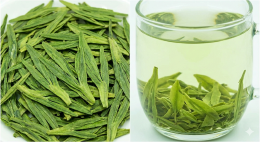
- Rolling and Shaping: After the leaves have been softened by the heat, they are rolled or pressed into specific shapes. This isn’t just for aesthetics; rolling breaks the cell walls of the leaf, bringing the essential oils to the surface so they can be easily released when you brew the tea. Whether it’s the flat, sword-like blades of Longjing or the tight, needle-like points of Maofeng, the shape is a signature of the tea’s origin.
- Drying: The final step involves a slow bake or a final toss in the wok to remove any remaining moisture. This stabilizes the tea for storage and further develops the flavor profile. A perfectly dried green tea should be crisp to the touch but should not smell burnt; it should smell like a concentrated version of a spring meadow.
The mastery involved in this process is staggering. A tea master must judge the temperature of the wok by feel and know exactly when the leaves have reached the perfect state of “fixation” simply by the scent rising from the pan. It is this human touch—the literal hands of the maker—that elevates a simple agricultural product into a work of liquid art.
The Art of the Pour: Brewing for Clarity
When you bring your tea home, the most common mistake is treating it like a robust black tea. Green tea is delicate; if you use boiling water, you will “scald” the leaves, releasing excess tannins that result in a harsh, astringent taste. Instead, aim for water that has cooled to about 80°C or 85°C. A simple trick if you don’t have a thermometer is to pour the boiling water into a fair cup or a different vessel first, let it sit for two minutes, and then pour it over your leaves.
For the most authentic experience, I recommend brewing in a tall, clear glass or a porcelain Gaiwan. The glass method, often called “Grandpa Style” in China, allows you to watch the “tea dance”—the beautiful sight of the buds standing upright and slowly drifting to the bottom. Avoid using heavy cast-iron or clay pots that retain too much heat, as they will effectively “cook” the delicate leaves and ruin the second and third infusions.
Famous Varieties & Origins
- West Lake Longjing (Dragon Well) — Hangzhou, Zhejiang
- Dongting Biluochun — Suzhou, Jiangsu
- Huangshan Maofeng — Huangshan, Anhui
- Lu’an Gua Pian (Melon Seed) — Lu’an, Anhui
- Xinyang Maojian — Xinyang, Henan
- Anji Bai Cha — Anji, Zhejiang
- Taiping Houkui — Huangshan, Anhui
- Zhu Ye Qing — Mount Emei, Sichuan
Back to Major Tea Categories .