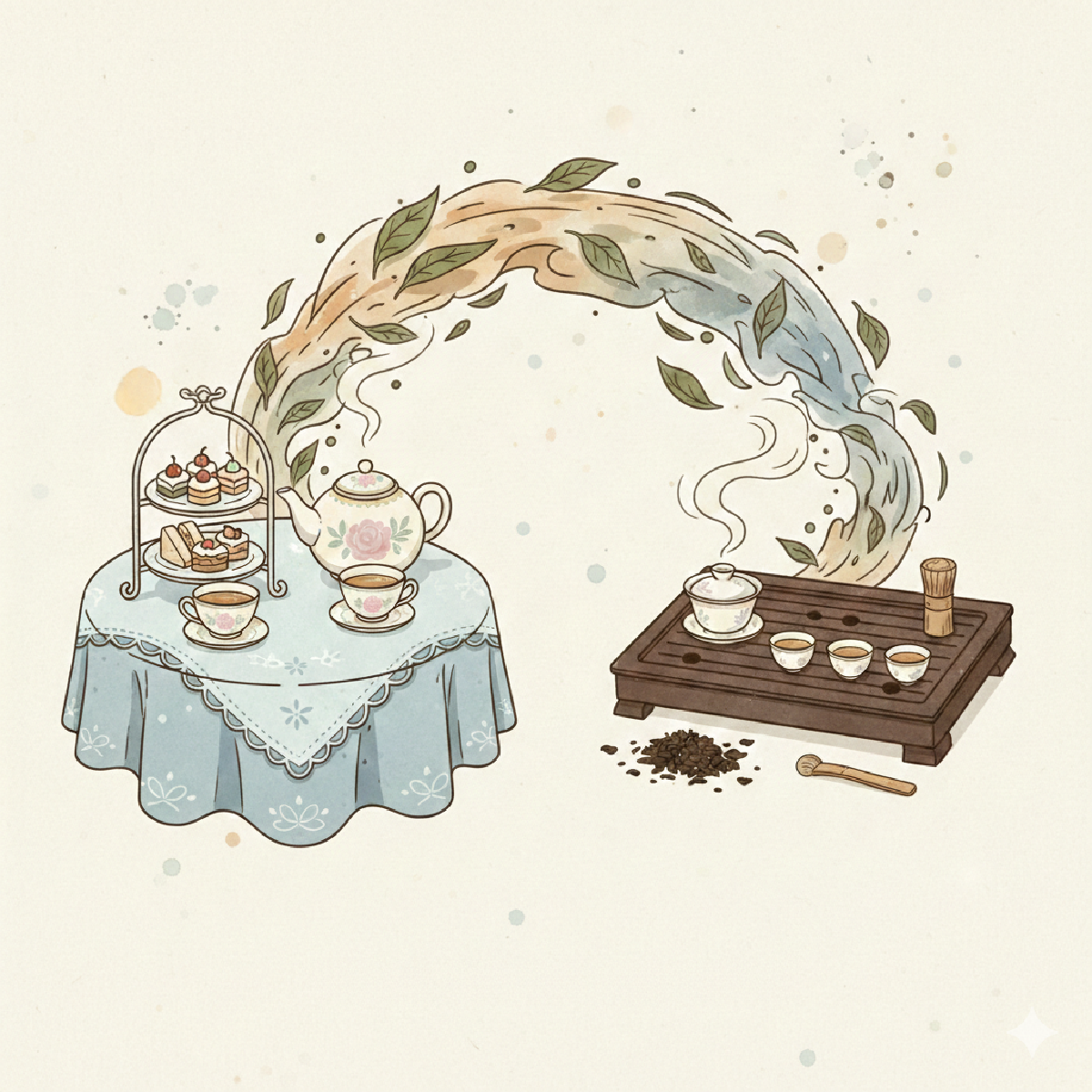
Two Traditions, One Source: Exploring English Tea Culture Through Chinese Eyes
For Chinese tea enthusiasts, English tea culture might seem like a world away—but the connection runs deeper than you might think. The afternoon tea ritual that defines British culture began with Chinese teas, and understanding this bridge helps you appreciate both traditions more fully.
This guide explores English tea culture not as a replacement for gongfu cha, but as a complementary tradition that offers different ways to enjoy and appreciate Chinese teas.
The Historical Connection: Chinese Teas That Shaped England
The relationship between Chinese and English tea culture started in the 1600s when the British East India Company began importing Chinese teas. Three Chinese teas, in particular, became foundational to English tea culture:
Keemun (Qimen Hong Cha) from Anhui province became the backbone of English breakfast blends. Its unique flavor profile—combining malty notes with hints of wine, orchid, and stone fruit—made it ideal for the robust morning tea that English culture demanded.
Lapsang Souchong (Zhengshan Xiaozhong) from Fujian’s Wuyi Mountains introduced Europeans to smoked tea. The pine-smoke aroma and bold flavor made it perfect for afternoon tea, standing up to rich foods and providing a distinctive character.
Yunnan Black Teas (Dian Hong) offered the strength and body that English palates preferred. These teas from Yunnan’s high elevations have natural sweetness and full body that work beautifully in English brewing methods.
These teas didn’t just arrive and stay unchanged—they were blended, adapted, and became part of a new cultural tradition while maintaining their Chinese origins.
Cultural Philosophy: Social Ritual vs. Meditative Practice
Understanding the fundamental difference in philosophy helps you appreciate both traditions:
English Afternoon Tea: The Social Ritual
Afternoon tea emerged in the 1840s as a social institution. Anna, the Duchess of Bedford, began having tea and light snacks in the afternoon to bridge the gap between lunch and dinner. It quickly became a way to gather, socialize, and enjoy refined company.
The focus is on:
- Community: Tea as a reason to gather
- Food Pairing: Tea accompanies a meal (sandwiches, scones, pastries)
- Accessibility: Simple brewing that doesn’t require special equipment
- Comfort: A warm, satisfying cup that can be enjoyed while conversing
Chinese Gongfu Cha: The Meditative Practice
Gongfu cha (literally “skillful tea”) focuses intensely on the tea itself. The small teapots, precise water temperatures, multiple infusions, and careful attention to timing are all designed to extract and appreciate the tea’s evolving flavors.
The focus is on:
- The Tea: The beverage itself is the star
- Flavor Exploration: Multiple steeps reveal different aspects
- Mindfulness: A meditative, present-moment practice
- Tradition: Honoring centuries of tea culture and technique
Neither approach is superior—they serve different purposes. English tea culture excels at bringing people together, while gongfu cha excels at deepening your relationship with the tea itself.
Brewing Methods: A Side-by-Side Comparison
The practical differences in brewing reflect these philosophical differences:
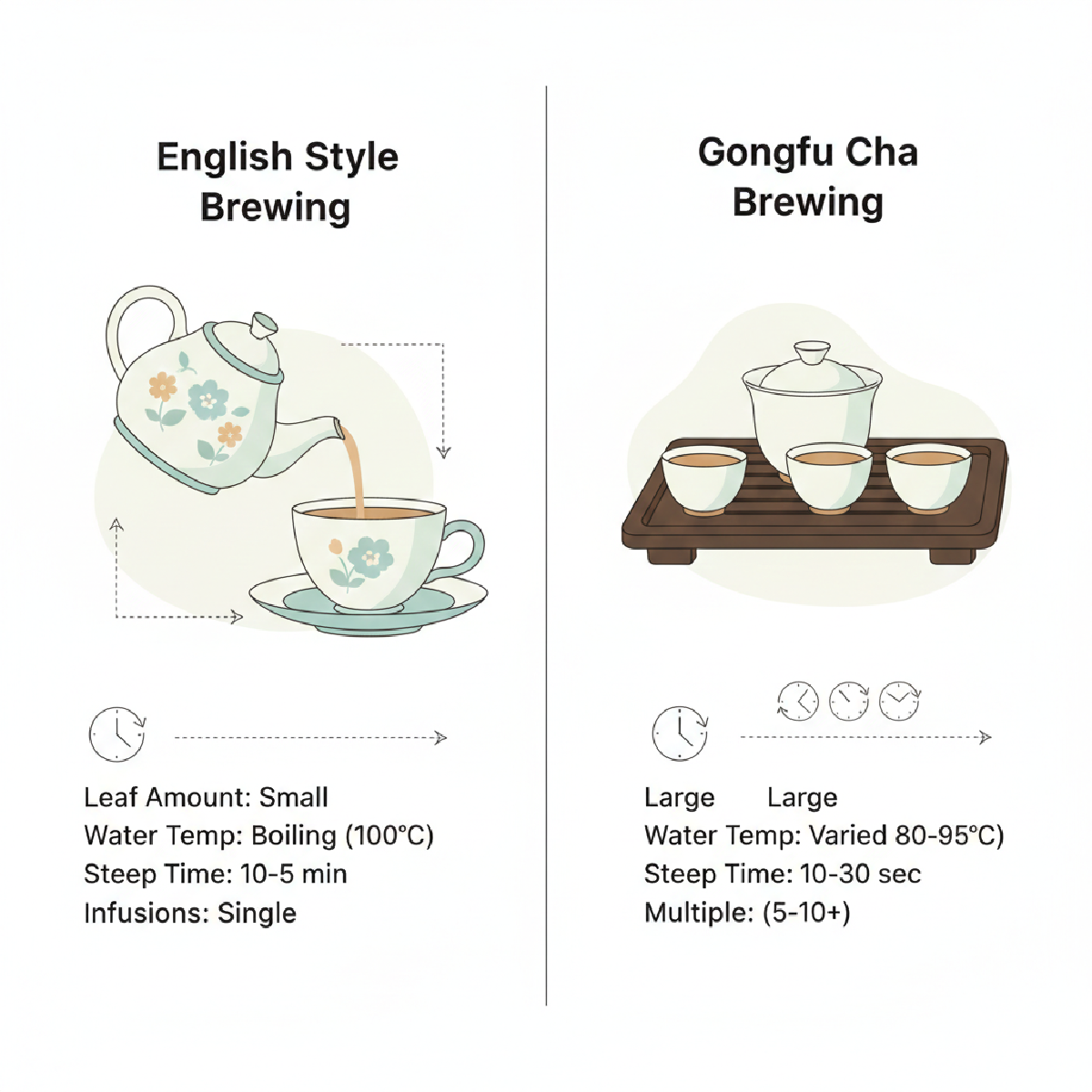
English-Style Brewing
Equipment: Teapot (2-4 cups) or individual cup with infuser Water: Boiling (212°F/100°C) Leaf Amount: 1 teaspoon (2-3g) per 6-8 oz cup Steeping Time: 3-5 minutes for black teas Number of Steeps: 1 (single infusion) Serving: Larger cups (6-8 oz), often with milk/sugar
Best For:
- Social gatherings
- Morning or afternoon tea
- Pairing with food
- Simplicity and ease
Gongfu Cha Brewing
Equipment: Gaiwan (lidded bowl) or small teapot (100-150ml) Water: Varies by tea (175-212°F/80-100°C) Leaf Amount: 5-8g per 100-150ml water Steeping Time: 10-30 seconds per steep Number of Steeps: 5-10+ infusions Serving: Small cups (30-50ml), tea only
Best For:
- Solo tea sessions
- Flavor exploration
- Tasting and evaluation
- Meditative practice
Which Chinese Teas Translate Best to English-Style?
Not all Chinese teas work equally well with English brewing methods. Here’s a practical guide:
Excellent for English-Style
Keemun (Qimen Hong Cha):
- Why: Designed for longer steeping, robust flavor
- Method: Boiling water, 3-4 minutes
- Result: Malty, wine-like, perfect for morning tea
- Can Add: Milk and sugar work well if desired
Yunnan Black Teas (Dian Hong):
- Why: Natural strength and body
- Method: Boiling water, 3-4 minutes
- Result: Full-bodied, slightly sweet, very satisfying
- Varieties: Golden Bud (Jin Ya) is particularly smooth
Lapsang Souchong:
- Why: Bold, distinctive, stands up to longer steeping
- Method: Boiling water, 3-4 minutes
- Result: Smoky, robust, perfect for afternoon tea
- Note: The smoke flavor intensifies with longer steeping
Good with Adjustments
Tieguanyin (Light Oolong):
- Adjustments: Reduce to 195°F (90°C), steep 2-3 minutes
- Result: Floral, lighter than black teas but pleasant
- Best For: Afternoon tea, especially with desserts
Dragon Well (Longjing):
- Adjustments: Cool to 175°F (80°C), steep only 2 minutes
- Result: Delicate, nutty, but loses complexity
- Note: Better suited to gongfu cha, but can work
Not Recommended for English-Style
Pu-erh: Too intense and earthy when brewed English-style. The long steeping time extracts too much, creating an overpowering cup.
Silver Needle (Bai Hao Yin Zhen): Too delicate—the long steeping makes it bitter and destroys its subtlety.
Heavily Roasted Oolongs: The extended steeping can make them too astringent.
The Afternoon Tea Experience: A Practical Guide
If you want to host an authentic afternoon tea using Chinese teas, here’s how:
The Setup
Tea Selection: Choose 2-3 Chinese teas:
- A robust Yunnan black or Keemun for the main tea
- A lighter option (like Tieguanyin) for variety
- Optionally, Lapsang Souchong for those who enjoy smoke
Food Pairings:
- Sandwiches: Pair with Keemun or Yunnan black (robust flavors complement savory)
- Scones: Keemun works beautifully (malty notes with clotted cream)
- Desserts: Lighter Tieguanyin or a delicate Chinese red tea
Equipment:
- Teapot (2-4 cup capacity)
- Tea strainer or infuser
- Cups and saucers
- Three-tier stand (traditional) or plates arranged similarly
The Ritual
- Boil fresh water (use filtered water for best results)
- Warm the teapot with hot water, then discard
- Add tea leaves (1 teaspoon per cup, plus “one for the pot”)
- Pour boiling water over the leaves
- Steep 3-4 minutes for black teas (set a timer!)
- Strain and serve immediately
- Offer accompaniments: milk, sugar, lemon (though Chinese teas are often best straight)
Cultural Note: In traditional English tea culture, you pour milk into the cup first (if using), then add tea. This prevents scalding the milk and creates a smoother blend. However, many modern tea enthusiasts prefer to add milk after to better control the strength.
Buying Guide: Finding Quality Chinese Teas for English-Style
When shopping for Chinese teas to enjoy English-style, look for these quality indicators:
For Keemun
What to Look For:
- Specific origin: “Qimen” or “Keemun” county, Anhui
- Grade: Special Grade or Grade 1
- Harvest: Spring harvest (typically smoother)
- Appearance: Fine, twisted leaves, golden tips
Price Range: $20-40 per 50g for good quality Red Flags: Vague origin, very low price, broken leaves
For Yunnan Black Teas
What to Look For:
- Origin: Yunnan province (Fengqing, Lincang regions are excellent)
- Type: “Dian Hong” or “Yunnan Black”
- Varieties: “Golden Bud” (Jin Ya) for smoother cups
- Appearance: Golden or black leaves, sometimes with golden tips
Price Range: $15-30 per 50g Red Flags: No origin information, very dark/black appearance (might be over-processed)
For Lapsang Souchong
What to Look For:
- Origin: Fujian, Wuyi Mountains area
- Authentic name: “Zhengshan Xiaozhong”
- Type: Traditional pine-smoked (if you want smoke)
- Appearance: Dark, twisted leaves
Price Range: $18-35 per 50g Red Flags: Artificial smoke flavor, no origin information
Appreciating Both Traditions
The goal isn’t to choose between English tea culture and gongfu cha—it’s to appreciate both. Each tradition offers something valuable:
English tea culture excels at:
- Bringing people together
- Creating accessible, satisfying tea experiences
- Pairing tea with food
- Simple, repeatable rituals
Gongfu cha excels at:
- Deep flavor exploration
- Meditative, present-moment practice
- Understanding tea’s complexity
- Honoring traditional techniques
As a Chinese tea enthusiast, you have the unique advantage of understanding the source material. When you drink Keemun English-style, you can appreciate its Chinese origins. When you brew it gongfu cha style, you can explore its full complexity. Both experiences enrich your relationship with tea.
Try this: Brew the same Yunnan black tea both ways. English-style will give you a robust, satisfying morning cup. Gongfu cha will reveal layers of flavor—honey, malt, cocoa, sometimes floral notes—that evolve with each steep. Neither is “better”—they’re different ways of experiencing the same remarkable leaves.
Conclusion: One Plant, Many Traditions
English tea culture and Chinese tea traditions both honor the same source: the Camellia sinensis plant. The differences in how each culture approaches tea reflect different values, histories, and social contexts. But at their core, both traditions celebrate the same thing: the simple pleasure of a well-brewed cup of tea.
As you explore English tea culture with your knowledge of Chinese teas, you’re not abandoning one tradition for another. You’re expanding your appreciation, discovering new ways to enjoy familiar teas, and connecting with a global tea culture that spans continents and centuries.
Whether you’re hosting an afternoon tea with Chinese Keemun or having a quiet gongfu cha session with the same tea, you’re participating in traditions that honor the same remarkable beverage. And that’s something worth celebrating.