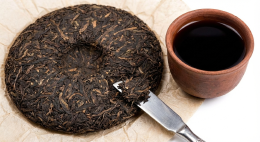
Black Tea (Heicha) is its wise, weathered elder. To avoid confusion, we must first clear up a linguistic mystery: what the West calls “black tea” (like Earl Grey or English Breakfast) is actually called “red tea” in China. True Chinese Black Tea, or Dark Tea, is a category of post-fermented teas that have been aged—sometimes for decades—to develop deep, earthy, and subterranean flavors that no other tea can mimic.
The Road of Ancient Echoes: History and Culture
The story of Black Tea is inseparable from the Ancient Tea Horse Road (Chama Gudao). For centuries, tea was carried by mule caravans from the lush mountains of Yunnan and Sichuan across the treacherous Himalayas to Tibet and beyond. During these grueling months-long journeys, the tea was exposed to rain, humidity, and temperature shifts. Natural bacteria and yeast began to interact with the leaves, causing them to ferment.
By the time the tea reached its destination, it had transformed from a bitter green leaf into a mellow, dark, and deeply comforting brew. The people of the high plateaus found that this fermented tea helped digest their heavy diets of yak butter and barley. Today, Black Tea is celebrated as a “living tea.” Much like a fine Bordeaux wine, it is one of the few teas that actually improves with age, becoming more valuable and chemically complex the longer it sits in a cellar.
The Pillars of the Earth: Famous Varieties
While Pu’er is the most famous member of this family, the world of Heicha is a vast landscape of regional traditions. Each variety uses different cultivars and specific “microbial recipes” to achieve its distinct character.
| Variety | Region | Style | Flavor Profile |
|---|---|---|---|
| Sheng (Raw) Pu’er | Yunnan | Naturally aged | Young: Floral/Bitter. Aged: Camphor, plum, and honey. |
| Shu (Ripe) Pu’er | Yunnan | Accelerated fermentation | Earthy, “forest floor,” thick cocoa, and peat. |
| Anhua Heicha | Hunan | Pressed bricks/logs | Notes of pine, incense, and “golden flower” fungus. |
| Liu Bao | Guangxi | Basket aged | Woody, betel nut, and a cooling “aged” sweetness. |
| Liu An | Anhui | Bamboo basket aged | Medicinal, earthy, and very smooth on the throat. |
Ancient Forests and Mist: The Geography
The geography of Black Tea is often a journey into the wild. In Yunnan, the most prestigious Pu’er comes from “Gushu” (Ancient Trees), some of which are 500 to 1,000 years old. These trees have deep root systems that pull minerals from the primeval soil of the Xishuangbanna and Pu’er regions. The culture here is one of reverence for the forest; the tea is not grown on manicured bushes but harvested by climbing tall trees in a diverse jungle ecosystem.
Further east in Guangxi, the humid caves of Wuzhou provide the perfect natural “cellar” for Liu Bao tea to age, while the misty peaks of Anhua in Hunan produce the famous “Dark Tea Logs” (Qian Liang Cha), which are wrapped in bamboo husks and left to weather the elements. In these regions, tea isn’t just a crop—it’s a generational investment, with grandfathers pressing tea cakes that their grandsons will eventually sell or drink.
The Alchemy of Time: How Black Tea is Made
The creation of Black Tea involves a process called Wo Dui (Wet Piling), or in the case of Raw Pu’er, decades of patient natural oxidation. It is the most “microbial” of all tea processes.
- Killing the Green (Shaqing): Like green tea, the leaves are fired in a wok, but they are left with more residual moisture and enzymes to allow for future fermentation.
- Sun Drying: The leaves are dried under the sun, creating “Maocha.” This preserves the living microbes on the leaf surface.
- Wet Piling (Wo Dui): For “Ripe” (Shu) Pu’er and many other Dark Teas, the Maocha is piled in high heaps, sprayed with water, and covered with blankets. This creates a warm, humid environment where beneficial bacteria and fungi (like Aspergillus niger) transform the chemical makeup of the tea over 45 to 60 days.
- Compression: The loose tea is steamed and pressed into various shapes—cakes (Bing), bricks (Zhuan), or mushrooms (Tuo)—which makes them easier to transport and helps them age evenly.
- The “Golden Flower” (Jin Hua): In certain Hunan bricks, a specific yellow fungus (Eurotium cristatum) is encouraged to grow. This “Golden Flower” is highly prized for its ability to break down fats and provide a unique flowery, medicinal sweetness.
Awakening the Dragon: How to Prepare and Taste
Because Black Tea is often compressed and aged, it requires a different approach than a delicate green tea. It needs heat and a “wake-up call.”
- The Awakening (The Rinse): Always rinse your Black Tea. Pour boiling water over the leaves and discard it after 5–10 seconds. This “awakens” the compressed leaves and washes away any dust accumulated during years of aging.
- Boiling Water: Do not be afraid of heat. Use full boiling water (100°C). Black Tea is hardy and needs the high temperature to release its deep-seated oils and minerals.
- The Vessel: A Yixing Purple Clay (Zisha) pot is the gold standard here. The porous clay retains heat and absorbs the tea’s oils, becoming “seasoned” over decades. If you don’t have one, a thick-walled porcelain Gaiwan works well.
- The Tasting: Look for “Chen Xiang” (Aged Fragrance). A high-quality Black Tea should never taste like dirt or mold; it should taste like a clean forest floor after rain, old library books, or dark chocolate. The texture should be “thick” or “heavy,” coating your tongue like a rich broth.
When identifying quality, look for the “Cha Qi” (Tea Energy). A truly great aged Black Tea should make you feel a physical warmth in your chest or a sense of deep relaxation—what tea masters call being “tea drunk.”
Back to Major Tea Categories .