The foundation of all Chinese tea knowledge begins with understanding the Six Major Categories. While it is a common misconception that different teas come from different plants, almost all authentic Chinese tea originates from a single species: Camellia sinensis. The incredible diversity we enjoy—from the grassy sweetness of a spring Green tea to the earthy depth of an aged Pu-erh—is determined by the artisanal processing of the leaf, specifically the level of oxidation and fermentation.
1. Green Tea (Lǜ Chá | 绿茶)
The Essence of Spring
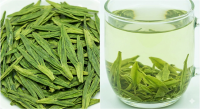
Green tea is the oldest and most popular category in China, representing the “fresh leaf” in its purest form. It is non-oxidized; the leaves are heated shortly after picking to “kill the green” (shāqīng), which stops the natural enzymatic breakdown. This preserves the vibrant green color, high antioxidant content, and the fresh, vegetal aroma that defines the category. Historically, Green tea has been documented since the Tang Dynasty (618–907 AD), where it was the primary form of “tribute tea” sent to the Imperial Court.
Quality in Green tea is often defined by the “tenderness” of the pluck. The most prestigious grade is Mingqian, referring to tea picked before the Qingming Festival in early April, when the buds are at their sweetest. As the season progresses into Yuqian (before the Grain Rain), the leaves become larger and the flavor profile becomes more robust and slightly more astringent.
Read more: Green Tea
Famous Varieties & Origins:
- West Lake Longjing (Dragon Well): Hangzhou, Zhejiang Province
- Dongting Biluochun: Suzhou, Jiangsu Province
- Huangshan Maofeng: Huangshan, Anhui Province
- Lu’an Gua Pian (Melon Seed): Lu’an, Anhui Province
- Xinyang Maojian: Xinyang, Henan Province
- Anji Bai Cha: Anji, Zhejiang Province
- Taiping Houkui: Huangshan, Anhui Province
- Zhu Ye Qing: Mount Emei, Sichuan Province
2. White Tea (Bái Chá | 白茶)
The Unspoiled Leaf
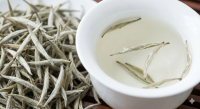
White tea is defined by its elegant simplicity. It undergoes the least amount of processing of any category, consisting only of withering and drying. Because the leaves are not pan-fired, rolled, or intentionally oxidized, they retain the silvery-white “down” (fine hairs) on the buds, resulting in a tea that is exceptionally high in amino acids and floral in character. This category was originally a specialty of Fujian province, and ancient records suggest it was used for its medicinal cooling properties long before it became a daily beverage.
The grading of White tea is uniquely strict and is based entirely on the picking standard. The younger the pluck, the higher the grade. White tea is also one of the few categories meant for aging; as it sits for years, the floral notes transform into deep aromas of dried dates and medicinal herbs.
Read more: White Tea
Famous Varieties & Origins:
- Bai Hao Yinzhen (Silver Needle): Fuding & Zhenghe, Fujian Province
- Bai Mudan (White Peony): Fuding & Zhenghe, Fujian Province
- Gong Mei (Tribute Eyebrow): Fuding & Zhenghe, Fujian Province
- Shou Mei (Longevity Eyebrow): Fuding & Zhenghe, Fujian Province
3. Yellow Tea (Huáng Chá | 黄茶)
The Imperial Rarity
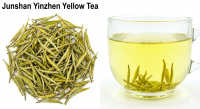
Yellow tea is a rare gem in the tea world, sharing a similar starting point with Green tea but including a unique, labor-intensive step called Mèn Huáng (Sealed Yellowing). After being heated, the warm, damp leaves are wrapped in paper or cloth to lightly oxidize in their own steam. This process removes the “grassy” sharpness found in Green tea, creating a mellow, smooth, and golden infusion that is incredibly gentle on the palate. Historically, Yellow tea was once reserved exclusively for the Emperor.
Because the “yellowing” process requires a master’s touch to prevent the leaves from spoiling or turning “stale,” it is increasingly rare in the modern market. It is often graded by the size and uniformity of the buds, with the needle-shaped varieties representing the highest artisanal achievement.
Read more: Yellow Tea
Famous Varieties & Origins:
- Junshan Yinzhen: Junshan Island, Hunan Province
- Mengding Huangya: Mengding Mountain, Sichuan Province
- Huoshan Huangya: Huoshan County, Anhui Province
- Dading Liuan Huangya: Liuan, Anhui Province
4. Oolong Tea (Wūlóng Chá | 乌龙茶)
The Artisan’s Masterpiece
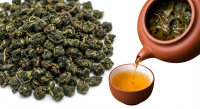
Oolong is often called the “Artisan’s Tea” because it is partially oxidized (anywhere from 20% to 80%) and requires the most complex processing. It involves repeated bruising, shaking, withering, and often charcoal roasting to coax out specific aromatic compounds. This results in an incredibly broad spectrum of flavors, ranging from light and floral to dark, stony, and fruity. Oolong was developed in the 17th century in the Wuyi Mountains of Fujian and became the centerpiece of the Gongfu Cha tea ceremony.
Grading in Oolong is multifaceted, focusing on the altitude of the garden (High Mountain vs. Lowland), the level of charcoal roasting, and the specific cultivar of the tea bush. Each variety listed below carries a distinct “rock rhyme” (yán yùn) or floral fragrance that defines its quality.
Read more: Oolong Tea
Famous Varieties & Origins:
- Tieguanyin (Iron Goddess of Mercy): Anxi, Fujian Province
- Da Hong Pao (Big Red Robe): Wuyi Mountains, Fujian Province
- Rougui (Cinnamon Oolong): Wuyi Mountains, Fujian Province
- Shuixian (Narcissus Oolong): Wuyi Mountains, Fujian Province
- Phoenix Dancong: Phoenix Mountains, Guangdong Province
- Alishan High Mountain Oolong: Alishan, Taiwan
- Dong Ding Oolong: Dong Ding Mountain, Taiwan
- Oriental Beauty (Bai Hao Oolong): Hsinchu & Miaoli, Taiwan
5. Red Tea (Hóng Chá | 红茶)
The Golden Nectar
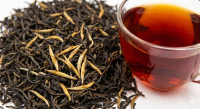
What the West calls Black tea is known in China as Red Tea (Hóng Chá), named after the reddish-amber color of the brewed liquid. It is fully oxidized, a process that turns the leaves dark and transforms their chemical makeup to produce robust flavors of malt, chocolate, and dark fruit. The history of Black tea began with Lapsang Souchong in the Wuyi Mountains, which is considered the world’s first black tea, originally smoked over pine wood to preserve it for long journeys.
Grading in the Chinese Red Tea tradition emphasizes the presence of golden buds. The highest tiers consist almost entirely of tiny, golden-tipped buds which provide a silky texture and natural honey sweetness, whereas lower grades include more mature leaves and offer a more astringent, “brisk” cup.
Read more: Red Tea
Famous Varieties & Origins:
- Qimen Hongcha (Keemun): Qimen County, Anhui Province
- Dianhong (Yunnan Gold): Lincang & Pu’er, Yunnan Province
- Lapsang Souchong (Zheng Shan Xiao Zhong): Wuyi Mountains, Fujian Province
- Jin Jun Mei (Golden Steed Eyebrow): Wuyi Mountains, Fujian Province
- Yingde Hongcha: Yingde, Guangdong Province
- Chuan Hong (Sichuan Black Tea): Yibin, Sichuan Province
6. Black Tea (Hēi Chá | 黑茶)
The Living Tea
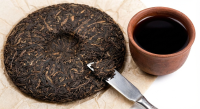
Black tea is the only category that undergoes true microbial fermentation. Unlike other teas, Black tea—the most famous of which is Pu-erh—is a “living” product that continues to evolve and improve with age. It was historically produced for trade with Tibet and Mongolia along the “Tea Horse Road,” where the long journeys and humid conditions naturally fermented the tea bricks. This fermentation creates deep, earthy, and woody flavors that are often compared to a damp forest floor or sweet beetroots.
The grading of Dark tea is unique; while leaf size matters, the most important factors are the age of the tea and the age of the trees. Gushu (Ancient Tree) tea is the highest grade, prized for its complex mouthfeel and “tea energy” (Cha Qi). Dark tea is also divided into Sheng (Raw), which ages naturally, and Shu (Ripe), which undergoes an accelerated fermentation process.
Read more: Black (Dark) Tea & Pu-erh
Famous Varieties & Origins:
- Sheng Pu-erh (Raw): Xishuangbanna & Lincang, Yunnan Province
- Shu Pu-erh (Ripe): Menghai & Kunming, Yunnan Province
- Liu Bao Tea: Wuzhou, Guangxi Province
- Anhua Hei Cha (Fu Brick): Anhua, Hunan Province
- Liu An Tea: Qimen, Anhui Province (distinct from Green Lu’an)
- Ya’an Zang Cha (Tibetan Tea): Ya’an, Sichuan Province